
Fast application response
Prove readability, sealing, mounting and behavior in the target operating environment.
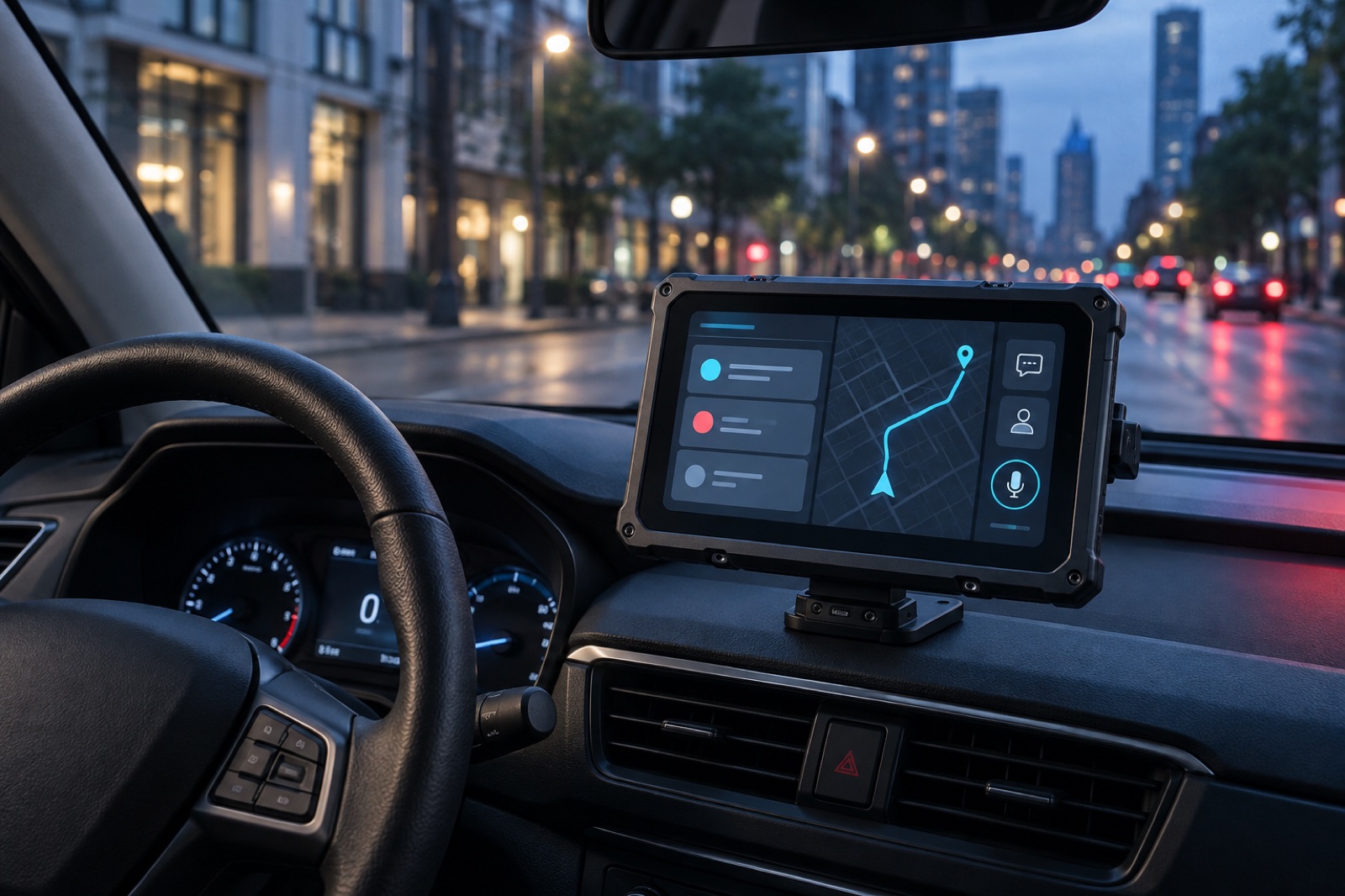
Taxi dispatch
For high-cycle urban vehicles where screen response, positioning, connectivity and mounting space all affect the working day.
The operating context
For high-cycle urban vehicles where screen response, positioning, connectivity and mounting space all affect the working day.
Combine navigation, driver communication and ride-service tasks in a compact dashboard terminal.
Role of the vehicle computer
The screen, processor, positioning module, vehicle interfaces, antennas, harness and application behavior need to be validated together. PDS provides the terminal platform; the final project defines how every element fits the machine.
These are decision points for engineering and validation—not decorative feature claims.
Prove readability, sealing, mounting and behavior in the target operating environment.
Define the receiver, antennas, correction path and status the operator must understand.
Map every simultaneous signal, peripheral and connector before freezing the harness.
Test startup, shutdown, offline behavior, recovery and the full operator workflow.
Screen size is only the first filter. Confirm OS, interfaces, positioning, cameras and power behavior against the production configuration.
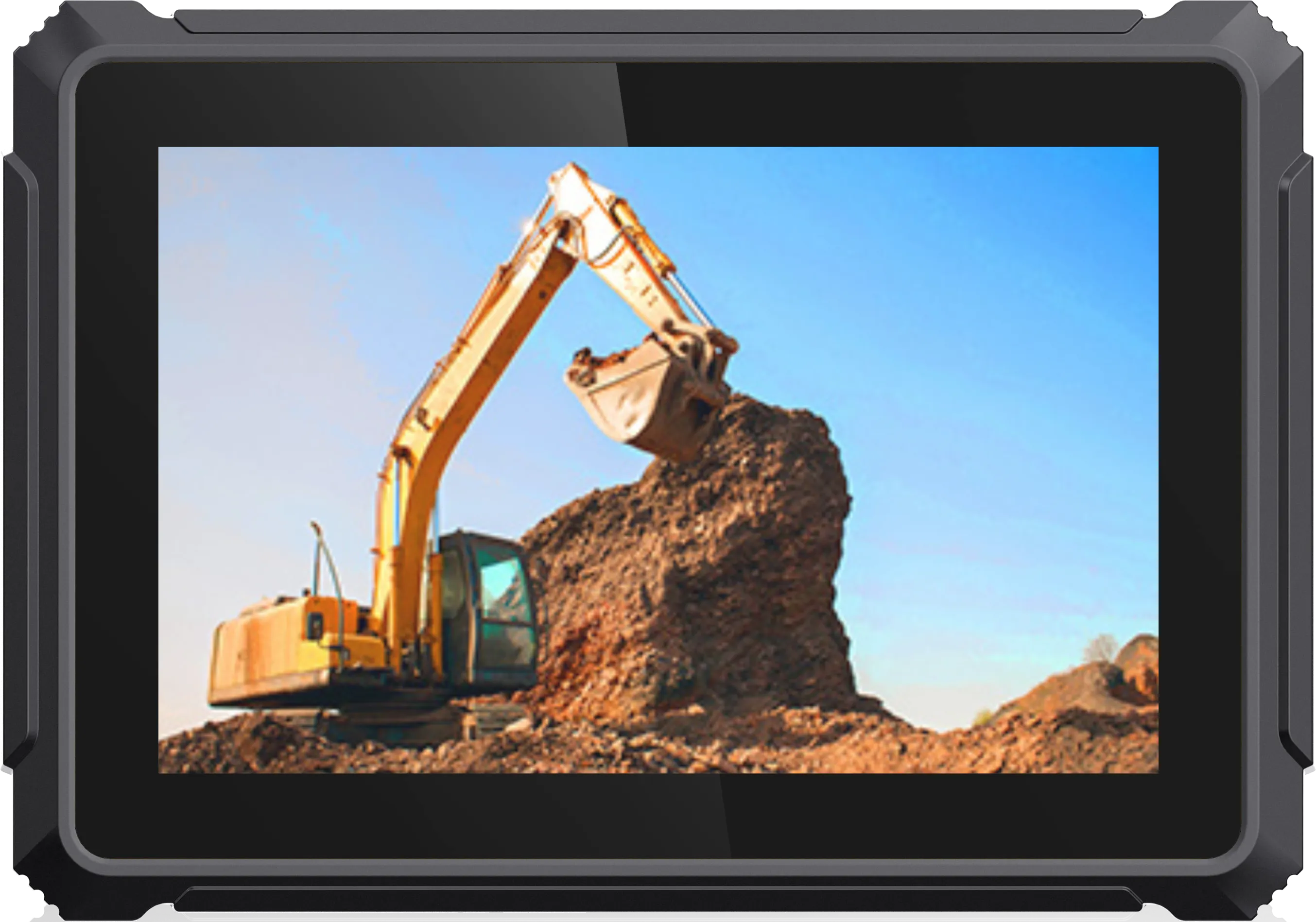
Compact vehicle terminal with front programmable keys and optional high-precision positioning for space-constrained cabs.
View configuration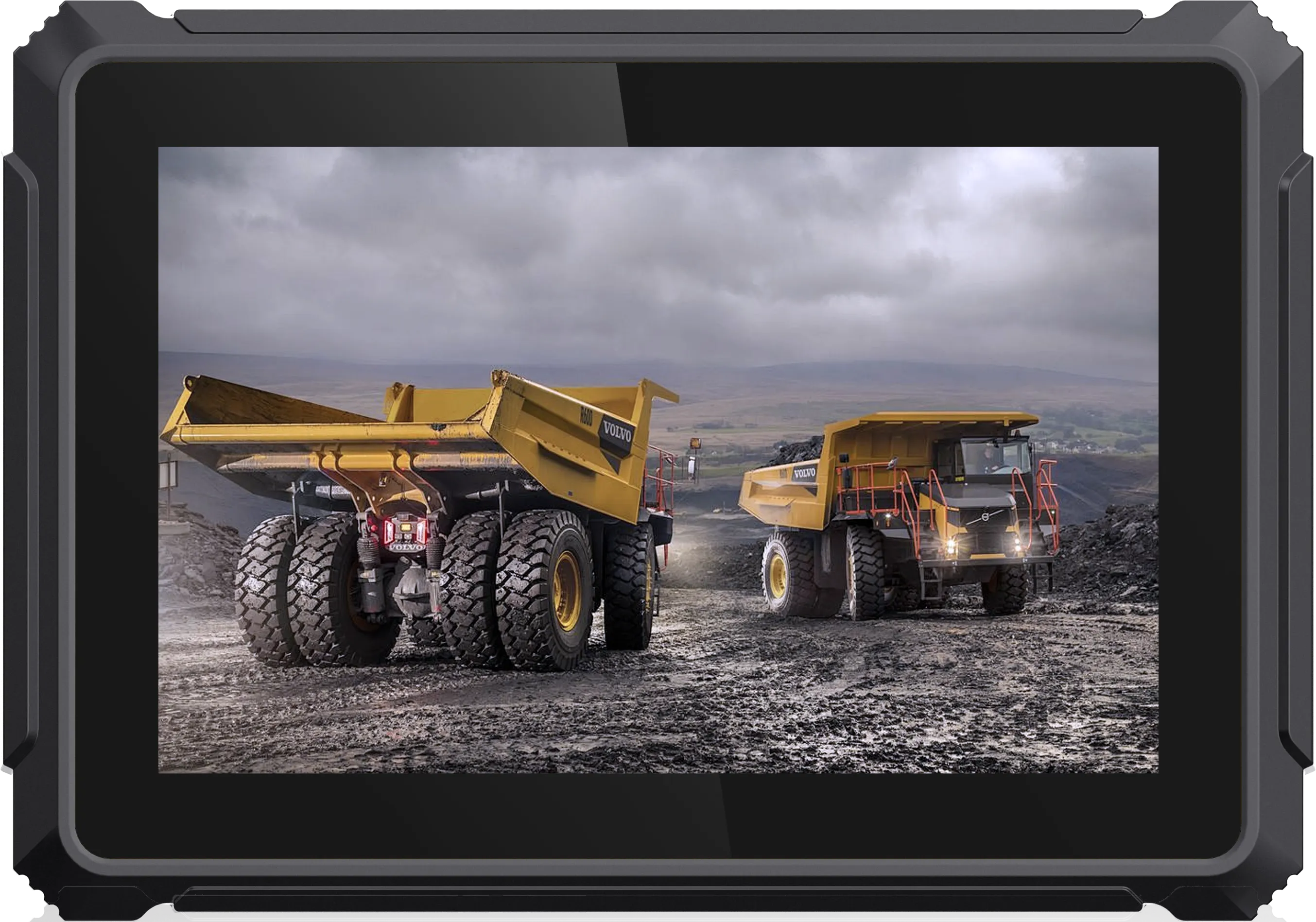
Balanced 8-inch Android terminal with vehicle I/O, wireless connectivity and optional GNSS/RTK integration.
View configuration
Qualcomm-based 8-inch platform for multi-camera workloads, dual-display projects and optional RTK positioning.
View configurationDescribe the vehicle or machine, mounting area, operator workflow, expected annual quantity, positioning accuracy, correction source, required interfaces, cameras, network regions, operating system and environmental limits.
A rugged display or RTK module is one part of the system. Antenna placement, steering or control hardware, field software, correction availability, harness design and validation remain project responsibilities.