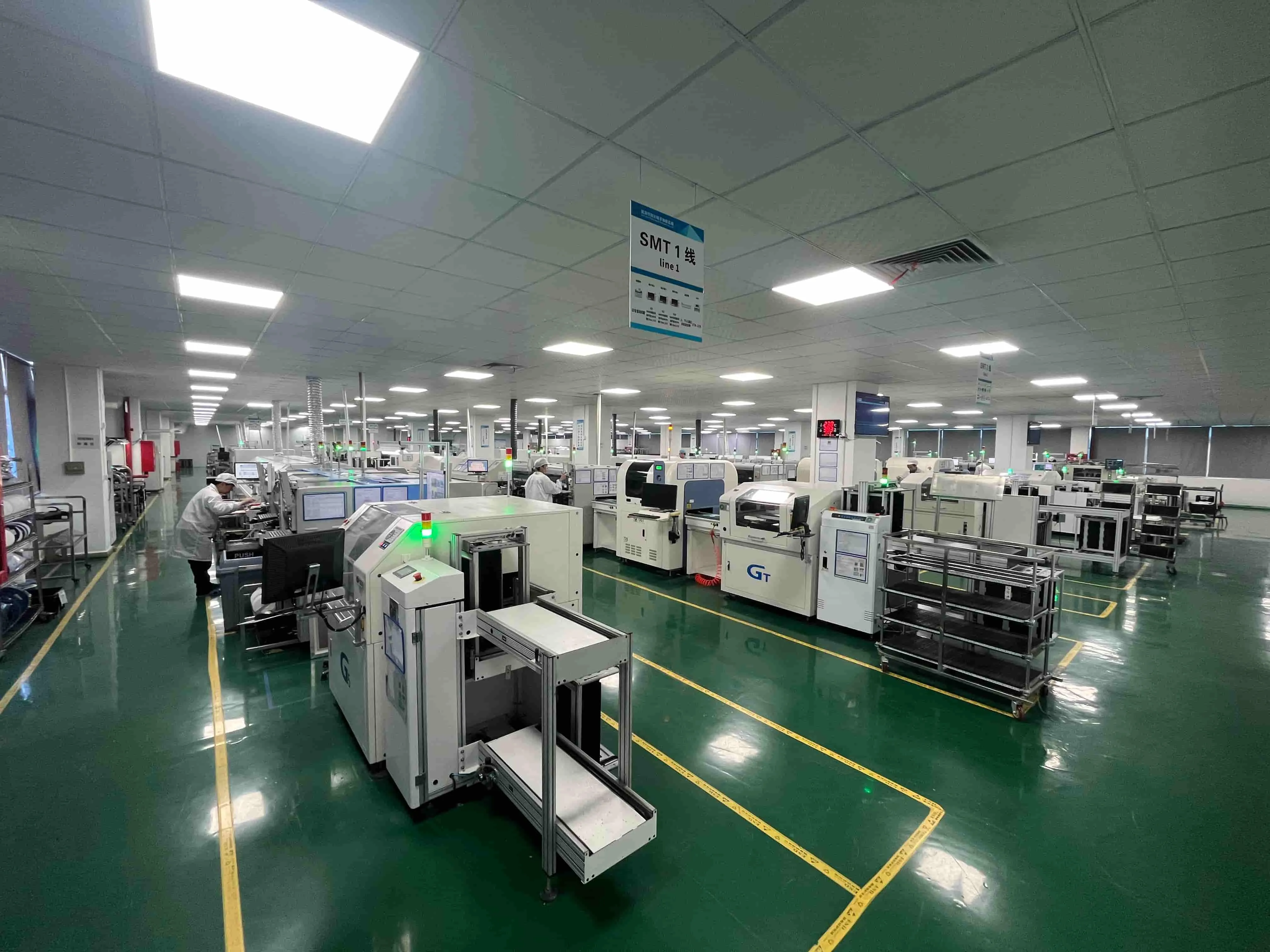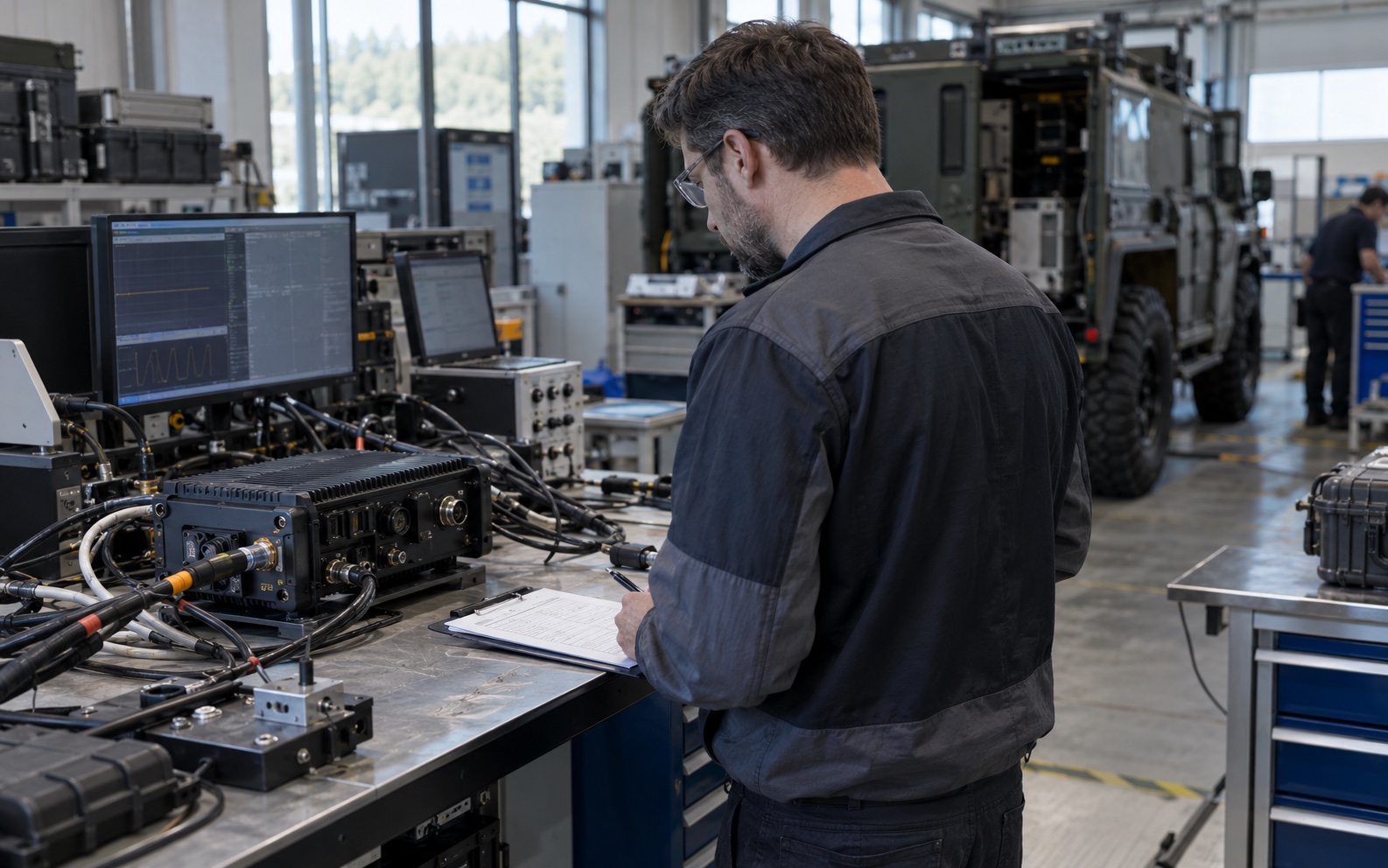
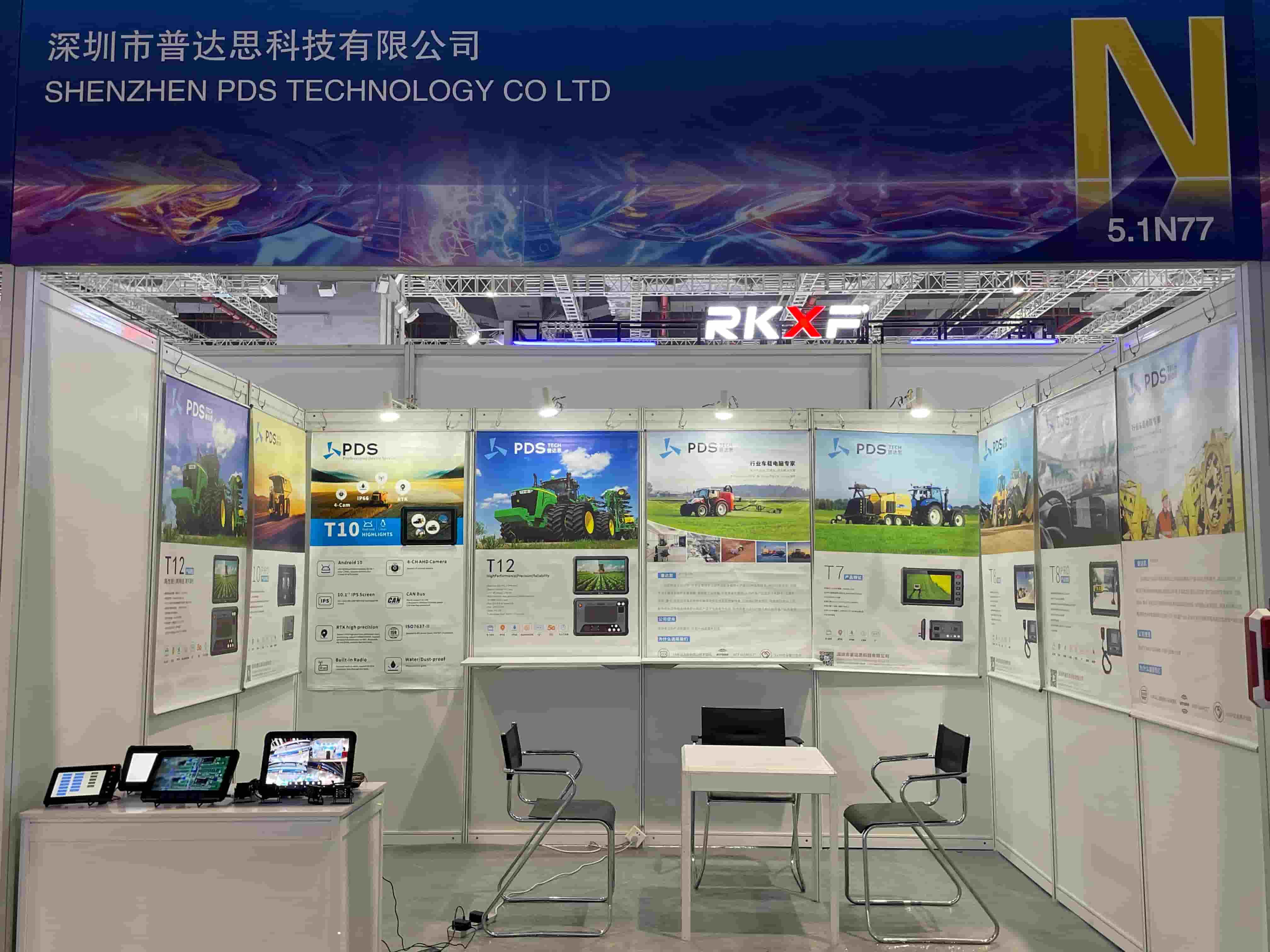
Shenzhen PDS Technology Co., Ltd., known as PDS Technology or PDS, develops rugged vehicle-mounted computers and positioning terminals for industrial vehicles. Its published range covers 7-, 8-, 10.1- and 12.1-inch platforms, with model-dependent Android or embedded Linux systems, vehicle interfaces, cameras, wireless communications and optional GNSS or RTK configurations. Final specifications are confirmed for each project.
PDS Technology is the Shenzhen-based company behind the T7, T8, T8 Pro, T10, T10 Pro, T10B and T12 vehicle-computer platforms. It serves equipment builders and system integrators that need an operator terminal connected to the machine, positioning system and application—not a consumer tablet added after the system is designed.
Which PDS Technology does this page describe?
The initials PDS are used by unrelated companies in several industries. On this website, PDS refers specifically to Shenzhen PDS Technology Co., Ltd. in Shenzhen, China. The PDS company profile describes a focus on high-precision positioning devices, rugged vehicle terminals and intelligent vehicle-control applications since 2011. Current product and project scope should still be checked against the latest controlled quotation and datasheet.
| Entity question | PDS answer on this website |
|---|---|
| Brand | PDS Technology, also shortened to PDS |
| Company | Shenzhen PDS Technology Co., Ltd. |
| Location | Shenzhen, China |
| Published scope | Rugged vehicle computers, vehicle-mounted terminals, GNSS/optional RTK positioning and project-defined vehicle integration |
| Current platform family | T7, T8, T8 Pro, T10, T10 Pro, T10B and T12 |
| Configuration rule | Operating system, I/O, positioning, wireless modules, harness and validation scope vary by model and project |
What PDS Technology builds
The common product is a rugged in-cab computing and display platform. Depending on the selected model and configuration, that platform can provide an outdoor-readable operator interface, Android or embedded Linux computing, CAN or serial vehicle connections, Ethernet and USB, camera inputs, wireless communications and GNSS or optional RTK positioning. The PDS vehicle-computer range is therefore a set of starting platforms rather than seven fixed, interchangeable boxes.
A vehicle computer does not create a complete machine system by itself. The application, machine protocol, antennas, correction service, steering or control hardware, mounting, harness and acceptance tests may belong to PDS, the vehicle OEM, a system integrator or another supplier according to the project specification. This boundary is especially important when comparing catalogue features.
How the seven published platforms are organized
| Format | Published starting platforms | Typical selection reason |
|---|---|---|
| 7 inch | T7 | A compact operator interface where cab space and a focused task are priorities. |
| 8 inch | T8 and T8 Pro | A balanced in-cab format; T8 Pro is the higher-compute direction for more demanding camera or display workloads. |
| 10.1 inch | T10, T10 Pro and T10B | More room for maps, machine data, cameras and mixed interfaces; the exact OS and positioning combination is model-dependent. |
| 12.1 inch | T12 | A larger operator view for information-rich workflows and larger cabs. |
Screen size is not a performance ranking. A 7-inch terminal can be the better engineering choice for a compact dashboard, while a larger display can be justified when the operator must see guidance, implement status, alarms and video together. Buyers should compare the complete workflow, simultaneous I/O and production-intent sample—not diagonal size alone.
Which industrial applications PDS publishes
The current PDS solutions overview groups applications into six paths: precision agriculture, agricultural auto-steering, construction and mining, fleet management, public transportation and taxi dispatch.
These categories describe operating contexts, not ready-made guarantees. A tractor guidance terminal must make correction state and field work understandable. An excavator or mining terminal may prioritize vibration, cameras and machine data. A fleet or transit terminal may prioritize repeated ignition cycles, local records, communications and driver interaction. The project still defines the software, interfaces and evidence required for that vehicle.
What OEM and ODM mean in the PDS context
PDS publicly describes project-specific options involving hardware, rugged structure, firmware, operating-system image, SDK or API support and vehicle I/O. In practice, the PDS OEM / ODM path starts by selecting a published platform and then defining which parts need to be adapted, tested and controlled. Availability, cost, minimum quantities and timing are confirmed per project; they are not implied by a website label.
| Website term | What it means for a buyer |
|---|---|
| Published | The feature appears in current company product material, but the quoted model and revision still need confirmation. |
| Optional | The item is not assumed to be present. Module, connector, antenna, software and commercial scope must be selected. |
| Project-defined | The parties must agree who supplies, integrates, tests and supports the function. |
| Production-intent | The sample uses the intended configuration, harness, image, antennas and peripherals rather than a generic demonstration unit. |
How a buyer should verify a PDS configuration
- Identify the exact model, hardware revision, screen and mounting arrangement.
- List the operating system and image owner, including update and recovery responsibility.
- Map every CAN, serial, Ethernet, USB, camera, GPIO and wireless function that must operate at the same time.
- Separate standard GNSS from optional RTK, then define receiver, antennas, correction path and degraded behavior.
- Confirm connector map, harness, vehicle power, ignition logic and shutdown recovery.
- Request current environmental and compliance evidence for the exact configuration and destination market.
- Validate a production-intent sample on the real vehicle against written acceptance criteria.
The rugged vehicle computer specification guide expands this list into a procurement process. For examples of how the terminal's role is separated from the wider machine system, review the PDS integration cases.
What the PDS name communicates
PDS explains its working principles as Professional, Device and Service. On this site, those principles mean describing the machine and operator problem in technical language, treating the device as part of a complete system, and carrying the project from requirements through sample validation and controlled release. They are a statement of working approach, not an independent quality ranking or certification.
Frequently asked questions about PDS Technology
Is PDS Technology a vehicle-computer company?
Yes. PDS publishes a family of rugged vehicle-mounted computers and positioning terminals for industrial vehicles. The company also describes project-specific integration and OEM/ODM support.
Does every PDS terminal include RTK GNSS?
No. Positioning capability varies by model and configuration. Some platforms publish standard GNSS, while RTK modules, radios, antennas and correction-data paths are optional or project-specific.
Does every PDS model run both Android and Linux?
No. Operating-system options are model-dependent. The exact image, drivers, application framework, update path and support period should be written into the project configuration.
Does PDS provide a complete auto-steering or fleet system?
A PDS terminal can provide the operator interface, computing platform and selected connections, but the complete system may also require customer software, machine protocols, controllers, actuators, cloud services, correction services and field validation.
Where can buyers compare current PDS platforms?
Use the product comparison page for the seven published starting platforms, then request a controlled datasheet and written configuration for the shortlisted model.
What should a first inquiry include?
Send the vehicle or machine, operator workflow, mounting area, required interfaces, cameras, positioning target, target markets, operating system, expected quantity and sample timing through the PDS project contact page.